Data Packet Delays Shape Card Approval Rates for International Retail Chains
Written by Greta Brooks · Oct 16, 2026

Data Packet Delays Shape Card Approval Rates for International Retail Chains
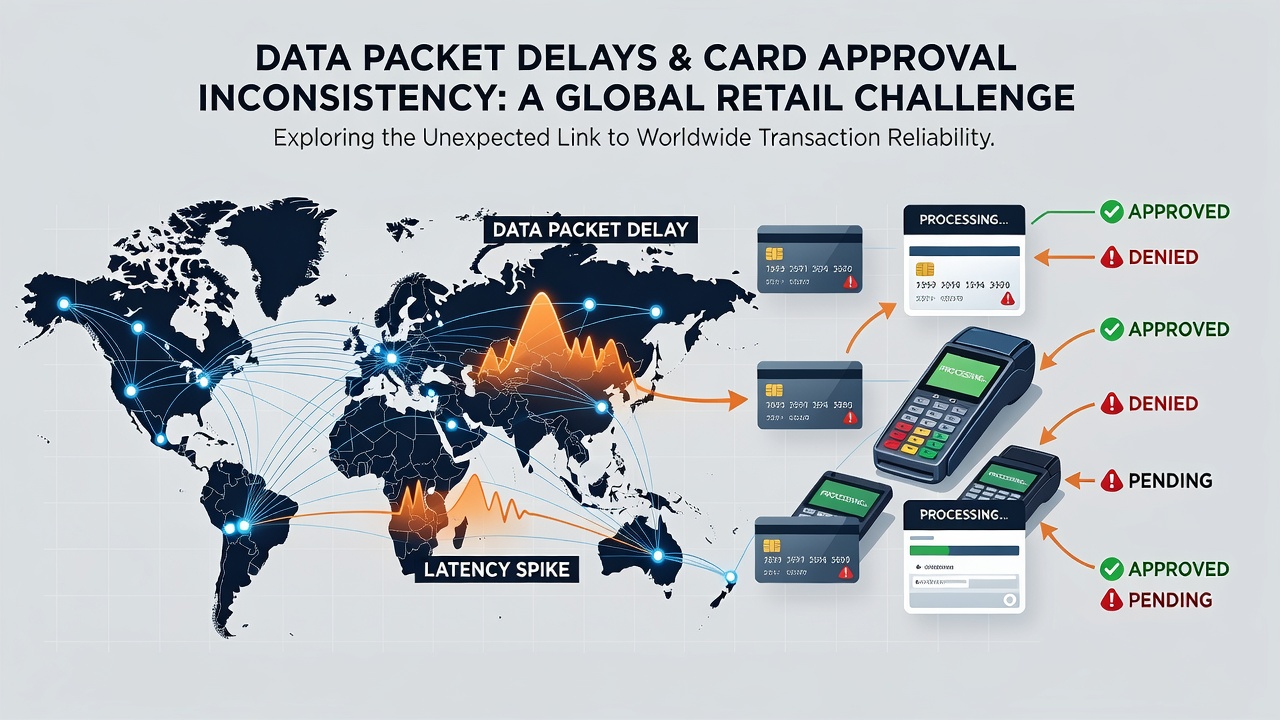
Retail payment systems rely on rapid exchanges of authorization requests between merchant terminals and card networks, yet data packet delays introduce measurable variations in how consistently those requests receive approvals. Network congestion, routing inefficiencies, and geographic distance all contribute to latency that alters the timing of these exchanges, and observers note that even brief interruptions can shift approval outcomes in ways that differ by region and processor. Researchers at institutions tracking payment infrastructure have documented how milliseconds of delay compound when requests traverse undersea cables or pass through multiple intermediaries, creating patterns that affect retailers operating across borders more than those confined to single markets.
Packet Transmission Mechanics in Payment Workflows
Payment authorization begins when a retailer submits card details through a gateway, and each data packet travels along defined routes that include switches, routers, and firewalls before reaching the issuing bank. When packets encounter queuing delays or retransmission requests due to minor errors, the total round-trip time extends, and systems interpret these extensions differently depending on configured timeout thresholds. Studies of transaction logs from high-volume merchants indicate that delays exceeding 800 milliseconds correlate with increased declines in regions where issuers enforce strict timing windows, while the same delay might trigger automatic retries elsewhere and produce approvals. Those who analyze gateway performance logs find that TCP retransmissions triggered by packet loss add further variability, particularly during peak shopping periods when shared network capacity becomes saturated.
Geographic factors amplify these effects because longer physical distances require more hops, and each hop introduces potential points of congestion. Retailers processing transactions from Asia to North American issuers routinely encounter higher baseline latency than domestic flows, and data collected through monitoring platforms shows that approval consistency drops when average packet delay rises above thresholds established by individual card networks. In October 2026, transaction datasets from multiple continents revealed that retailers using optimized routing protocols maintained steadier approval percentages despite variable network conditions, whereas those relying on default paths experienced wider fluctuations tied directly to measured delay spikes.
Regional Differences in Approval Stability
Approval consistency varies sharply across continents because issuers in different jurisdictions apply distinct risk models that interact with timing signals. European processors, for instance, often incorporate latency metadata into fraud scoring, so extended packet delays can elevate risk scores and reduce approvals even when the underlying transaction appears legitimate. In contrast, issuers in parts of the Asia-Pacific region prioritize retry logic that absorbs moderate delays without altering outcomes. A report published by the Bank for International Settlements highlights how these divergent approaches create measurable differences in cross-border approval rates when network conditions fluctuate.
North American retailers report similar patterns when expanding into Latin American markets, where infrastructure variability produces packet delays that exceed those seen on domestic circuits. Observers tracking settlement data note that merchants who deploy edge caching or regional gateways reduce the incidence of timing-related declines, and the improvement appears most pronounced during hours when transcontinental routes experience congestion. These adjustments do not eliminate delays entirely but stabilize the window in which authorization responses return, thereby narrowing the range of outcomes.
Measurement Approaches and Mitigation Strategies
Payment processors monitor round-trip times through synthetic transactions and real-time telemetry embedded in gateway software, allowing them to correlate packet delay metrics with approval percentages on a per-region basis. When delay distributions widen, approval consistency declines because borderline transactions fall outside acceptable timing parameters more often. Retail chains that implement active route selection based on current latency readings have documented narrower variance in approval rates across their international store networks. Academic analyses of payment network traces confirm that small reductions in average delay, achieved through peering agreements or dedicated lines, produce outsized gains in consistency for high-volume merchants.
Hardware upgrades at the merchant side, such as faster network interface cards and updated firmware on point-of-sale devices, also contribute by shortening the initial packet generation phase. Combined with monitoring that flags sustained delay increases, these measures help retailers anticipate periods when approval patterns may shift. Data from October 2026 indicates that chains adopting such combined approaches saw approval rate stability improve across multiple currencies and time zones simultaneously.
Conclusion
Packet delays in data transmission create a direct but often overlooked influence on card approval consistency for retailers operating worldwide. Because authorization systems respond to timing as one input among many, variations in network performance translate into measurable differences in how frequently transactions succeed or fail. Retailers that track delay metrics alongside approval data can identify patterns specific to their geographic footprint and adjust routing or infrastructure accordingly. As global payment volumes continue to grow, the relationship between network behavior and authorization outcomes remains a factor that processors and merchants monitor through ongoing measurement and targeted improvements.